


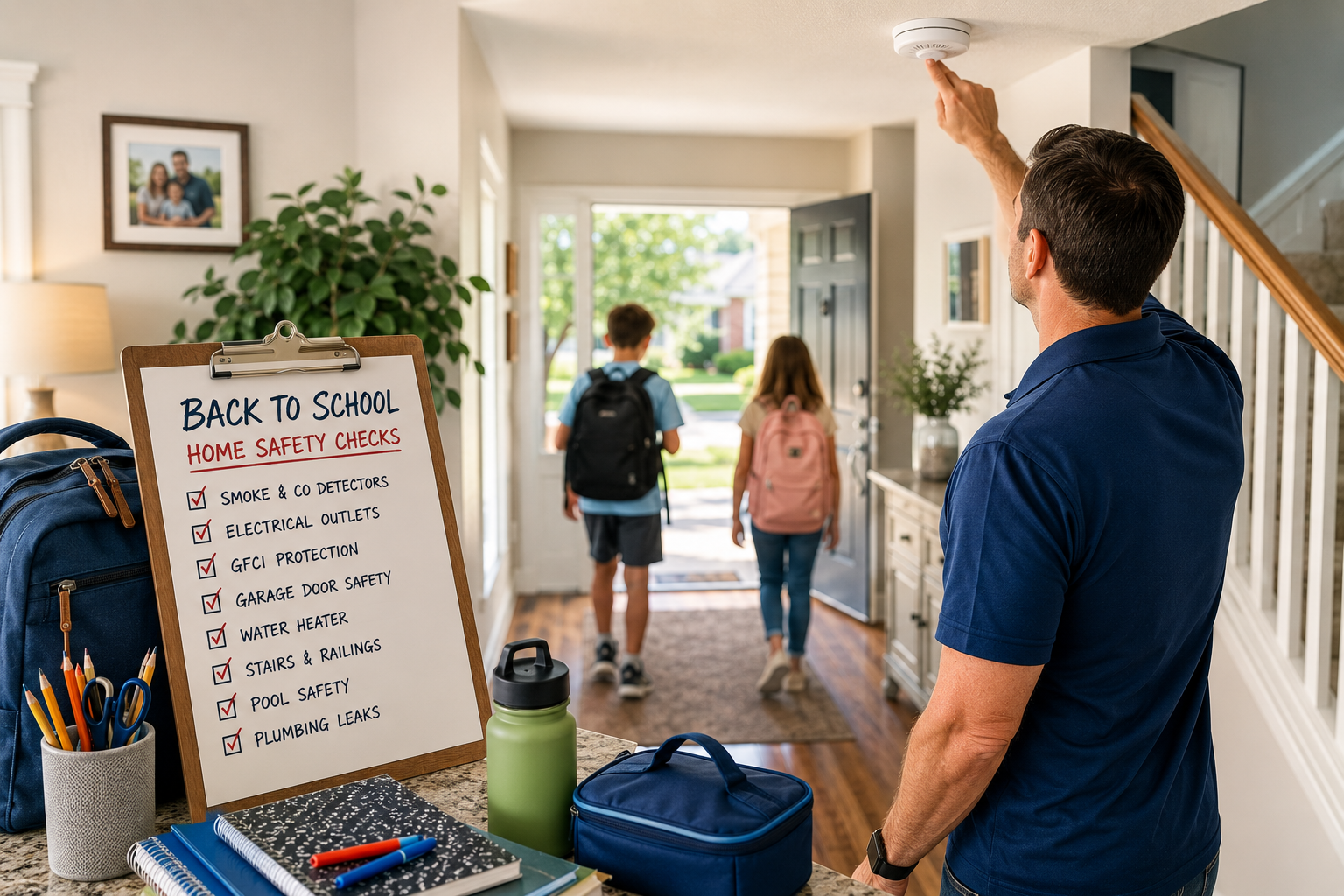
Back-to-school season has arrived across North Texas. Calendars are filling up again, morning routines are changing, and families are shifting from the looser pace of summer to school, sports, activities, homework, and everything else that comes with a new academic year.
It is also a surprisingly good time to think about something that probably isn’t on the school-supply list: the safety and condition of your home.
Most people understand the value of a professional home inspection when buying a house. What many homeowners don’t realize is that an inspection doesn’t have to be something you only do during a real estate transaction.
An annual maintenance inspection gives North Texas homeowners an opportunity to have the major systems and components of their home professionally evaluated after they have lived there for a year, five years, ten years, or longer. It can uncover safety concerns, developing maintenance problems, and changes that are easy to overlook when you see the same house every day.
And when children are heading back to school and household routines are resetting, there are some particularly important safety items worth checking.
Test the Smoke and Carbon Monoxide Detectors You Usually Forget About
Smoke and carbon monoxide detectors are easy to ignore because, ideally, you rarely hear from them.
That doesn’t mean they should be forgotten.
Test the detectors throughout your home and pay attention to where they are located. This is especially important if you’ve renovated, converted rooms to different uses, or simply haven’t thought about the detectors since moving in.
During a Semper Fi home inspection, accessible smoke and carbon monoxide detectors are among the safety components inspected.
For homeowners in established North Texas neighborhoods, an annual maintenance inspection can also be valuable because the house may have changed substantially since its last real estate inspection. Owners replace equipment, remodel rooms, add devices, make repairs, and sometimes inherit DIY work from previous owners. A safety feature that was functional when you purchased the house isn’t guaranteed to remain that way indefinitely.
Look at the Outlets Your Family Actually Uses Every Day
Back-to-school routines can mean laptops, tablets, phones, watches, gaming systems, printers, desk lamps, and other electronics are suddenly competing for outlets again.
Pay attention to loose outlets, damaged covers, outlets or switches that feel unusually warm, flickering lights, frequently tripped breakers, or extension cords and power strips being used as permanent solutions.
GFCI and AFCI protection also plays an important safety role in appropriate areas of the home.
A standard Semper Fi home inspection evaluates accessible electrical service panels, branch circuits, connected devices and fixtures, and GFCI and AFCI safety protection.
North Texas housing makes this particularly worth considering because the Metroplex contains everything from mid-century homes in established Dallas and Fort Worth neighborhoods to decades of suburban development across Tarrant, Collin and Denton counties. Electrical systems, renovations, additions, and homeowner modifications can vary dramatically from one property to the next.
The age printed on the listing when you bought your home doesn’t tell the whole story. What has happened to the electrical system since the house was built matters too.
Don’t Forget the Garage Door
For many North Texas families, the garage is practically the front door.
Kids come and go through it. Bikes and sports equipment are stored there. Families unload groceries there. Older students may start driving themselves to school through that same garage this year.
That makes garage-door safety worth more than a passing glance.
Semper Fi’s standard home inspection includes the garage door operator. Homeowners should pay attention to whether the door operates normally and whether its safety features are functioning properly.
It is exactly the kind of component that can work every day for years without anyone thinking much about it until something changes.
Check Stairs, Railings and Everyday Fall Hazards
Loose handrails, damaged steps and other fall hazards can gradually become part of the scenery.
Walk through the house as though you don’t live there.
Are handrails secure? Have steps or flooring changed? Is anything loose, damaged, or creating a trip hazard? Have rugs, furniture, cords, backpacks or other household items changed how people move through frequently traveled areas?
This can be especially relevant in the two-story homes common throughout many newer North Texas suburban communities, where stairs may be used dozens of times every day.
Interior and exterior stairways, along with porches, balconies and decks, are among the structural components evaluated during a standard home inspection.
If You Have a Pool, School Starting Doesn’t End Pool Season
August in North Texas is still very much swimming weather.
But once school starts, the way families use the pool often changes. Instead of children being outside throughout the day, swimming may shift to afternoons, evenings and weekends. Younger children may also be moving through the house or backyard while older siblings and parents are distracted by homework, dinner and activities.
Pool safety features deserve continued attention.
A Semper Fi pool and spa inspection can include the pool surface, skimmers, decking, coping and equipment as well as lights, GFCI safety outlets and safety features such as gates and fences.
This is particularly relevant across suburban areas where backyard pools are common, from established properties in Plano and Arlington to newer communities throughout Frisco, McKinney and Mansfield.
The important question isn’t simply whether the pool works. It is whether its visible mechanical and safety components are still performing as they should.
Pay Attention to the Water Heater, Plumbing and the Things You Don’t See Every Day
A small plumbing leak can exist quietly long before it becomes the kind of problem that interrupts your day.
Look beneath sinks and around toilets, washing machines, water heaters and other accessible plumbing fixtures. Pay attention to staining, moisture, corrosion, unusual odors, or changes in water pressure.
Water heaters and plumbing systems are part of a standard home inspection, and an annual maintenance inspection gives homeowners another opportunity to have these components evaluated after years of everyday use.
That matters throughout DFW, but the specific concerns can differ with the property. An older Dallas home may have plumbing components from multiple eras of repairs and renovations. A newer home in rapidly growing portions of Collin or Denton County may have newer systems, but newer does not mean maintenance-free.
Your House Has Changed Since the Day You Bought It
This may be the most important home maintenance point homeowners forget.
The inspection you received when you purchased the house was an evaluation of its condition at that time.
Your home has not been frozen in place since closing.
Systems have aged. Materials have weathered. Repairs have been made. Appliances and equipment may have been replaced. Soil has moved. Trees have grown. Plumbing fixtures have been used thousands of times. Your family may have added a pool, remodeled a bathroom, finished a room, installed new electrical equipment, or changed landscaping and drainage around the property.
North Texas homes also exist in an environment where expansive soils, periods of drought, severe thunderstorms, hail, strong winds, and temperature extremes can affect a property over time.
Yet many homeowners go years without another professional looking at the house as a complete system.
An Annual Maintenance Inspection Is a Checkup for the Home You Already Own
This is where an annual maintenance inspection can be especially valuable.
It isn’t just for people who suspect something is wrong.
The purpose is to periodically evaluate the condition of the home’s major systems and components so homeowners can better understand what needs attention now, what may need maintenance, and what they should continue monitoring.
Homeowners who make professional inspections part of their maintenance routine can benefit by:
- Identifying developing problems before they become larger or more disruptive
- Discovering safety concerns they may not notice during everyday life
- Prioritizing maintenance instead of waiting for something to fail
- Keeping tabs on aging mechanical, electrical, plumbing and structural components
- Getting an objective look at changes to the home over time
- Creating a more informed maintenance plan for one of their largest investments
Think about the other things your family checks routinely.
You schedule physicals even when nobody is sick. You take the car in for maintenance before it stops running. You replace filters before equipment fails.
A house benefits from proactive attention too.
North Texas Homes Don’t All Age the Same Way
A useful annual inspection should also reflect where and how the home was built.
A 1950s pier-and-beam house in Fort Worth doesn’t have the same maintenance profile as a newer slab-on-grade home in Frisco. A heavily wooded property may have different drainage, roof and sewer concerns than a house in a newer development with little mature vegetation. A property with a pool, irrigation system, detached workshop or other improvements has additional components to maintain.
Across Dallas, Tarrant, Collin, Denton, Rockwall, Ellis, Johnson, Parker, Wise and Hood counties, differences in construction age, soil conditions, development patterns, lot size and property features can change what homeowners need to watch.
That is why home maintenance should be based on the actual property rather than a generic checklist.
Depending on the home, Semper Fi can also inspect pools and spas, sewer lines, irrigation systems, wells, septic systems, barns and other outbuildings, in addition to the structural and mechanical systems included in the standard inspection.
Add Your Home to the Back-to-School Routine
You don’t need to turn August into a massive home-improvement project.
Start with the safety items your family depends on every day. Test the detectors. Look at the outlets. Check the garage door. Pay attention to stairs, railings and pool barriers. Notice leaks or other changes you’ve been meaning to investigate.
And if it has been years since a professional home inspector looked at your house, consider adding an annual maintenance inspection to the routine.
The inspection you had before closing helped you understand the house you were buying.
An annual maintenance inspection can help you take better care of the home your family is living in now.
For a professional home or commercial inspection in the Dallas/Fort Worth Metroplex or Greater Houston Metro Area that will provide you peace of mind, schedule your inspection now
Call
682-351-2267
or book online