


North Texas weather has a way of making winter feel far away right up until it isn’t.
One week may still feel like fall. Then a strong cold front arrives, temperatures drop quickly, and suddenly the parts of your home that have not mattered much since last winter are being asked to perform again.
That makes before the first real cold snap the best time to take a look at the house.
A professional home inspection can help identify conditions that may deserve attention before colder weather arrives, but you may already have another useful resource sitting in your files: your previous inspection report.
If your report mentioned insulation, exposed plumbing, aging heating equipment, damaged weatherstripping, roof or drainage concerns, irrigation components, or other maintenance items, now is a good time to revisit those findings.
Your inspection report was never meant to disappear into a folder after closing. It can also serve as a roadmap for maintaining the home you now own.
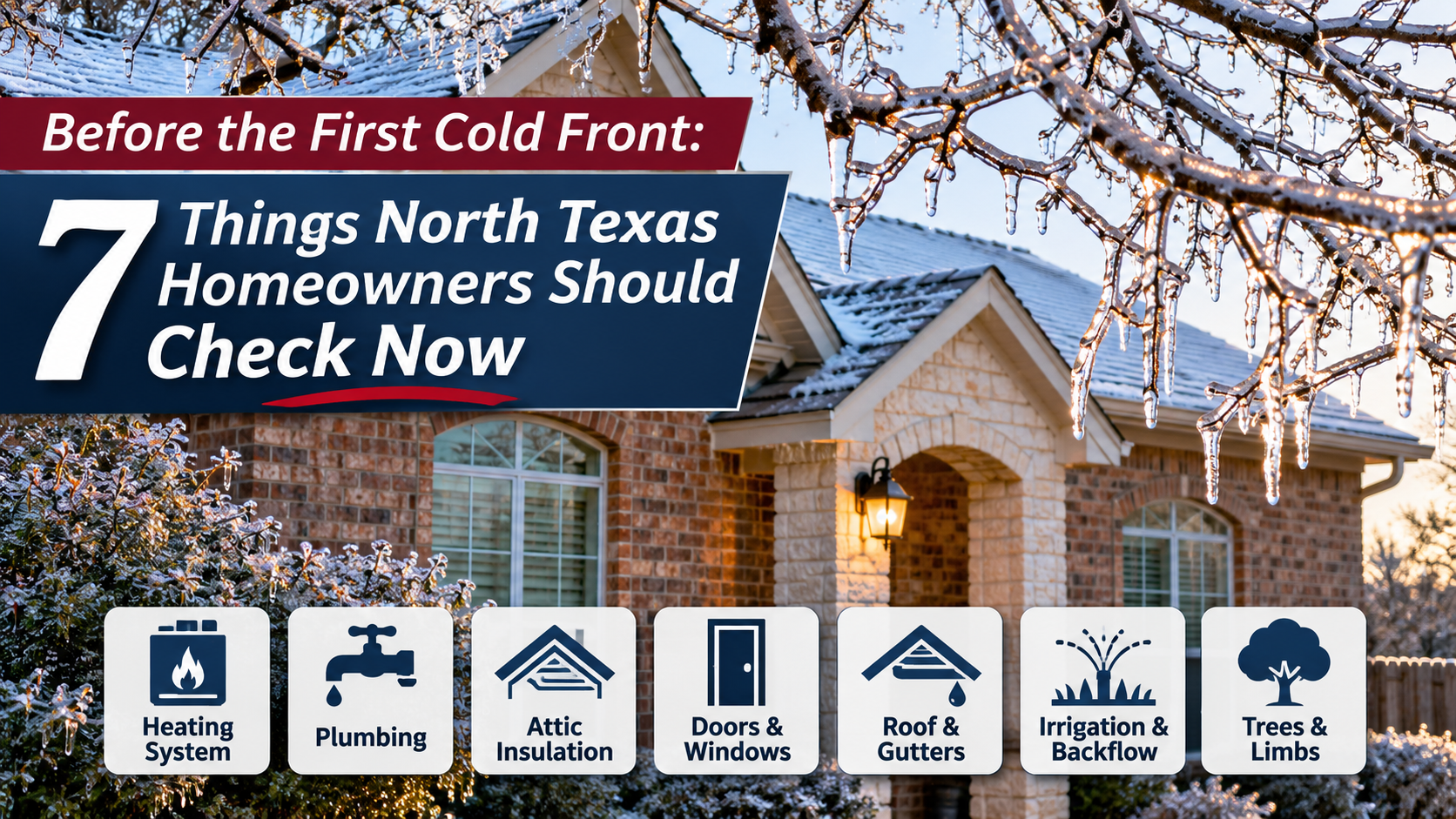
Here are seven areas North Texas homeowners should check before temperatures begin to fall.
1. Make Sure the Heat Is Ready Before You Need It
Your air conditioner gets plenty of attention in North Texas.
The heating side of the system can go months without being used.
Do not wait until the first freezing night to discover that the furnace or heat pump is not operating the way you expected.
Turn the heat on before cold weather arrives and pay attention to how the system starts and runs. If it is making unusual noises, struggling to maintain temperature, producing unusual odors after the initial startup period, or simply not performing the way you remember, schedule service before demand spikes during a cold front.
If your home inspection previously noted an older HVAC system, damaged ductwork, unusual temperature differences, or another heating-related concern, this is an especially good time to follow up.
A standard Semper Fi home inspection includes evaluation of accessible heating equipment and duct systems, giving homeowners useful information about the visible condition and operation of those components.
2. Look Again at Exposed and Vulnerable Plumbing
A North Texas freeze does not have to become historic to create plumbing problems.
Outdoor faucets, exposed pipes, plumbing in unconditioned areas, and pipes located near poorly insulated exterior walls can become vulnerable as temperatures fall.
Before freezing weather arrives, look for plumbing that is exposed to the elements or located in unusually cold areas of the house.
If your inspection report identified:
- Exposed exterior piping
- Plumbing leaks
- Missing or inadequate insulation around vulnerable areas
- Problems with exterior faucets
- Other plumbing concerns
those items deserve another look before temperatures drop below freezing.
It is also worth knowing where the home’s main water shutoff is before you ever need it. That is not because a freeze is guaranteed to cause a problem. It simply makes dealing with an unexpected plumbing issue much easier.
Semper Fi inspections include visible plumbing systems and water heaters as part of the standard home inspection.
3. Revisit Attic Insulation and Ventilation Findings
The attic plays an important role in both summer and winter.
Adequate insulation helps separate the conditioned living space from temperature extremes above it, while proper ventilation helps the attic function as intended.
If your inspection report noted low insulation levels, disturbed or missing insulation, ventilation concerns, or other attic conditions, consider addressing those items before cold weather arrives rather than after the house becomes uncomfortable.
North Texas temperature swings can be substantial, and the attic is one of the places where weaknesses in the home’s thermal envelope may become more noticeable.
During a Semper Fi inspection, accessible roof structures, attics, insulation, and ventilation are evaluated as part of the home’s structural systems.
4. Check Weatherstripping, Exterior Gaps and Doors
A small gap around a door or window can be easy to ignore when temperatures are mild.
Once cold air starts moving through it, you notice.
Before the first cold front, walk around the house and look at exterior doors, windows, visible seals, and areas where materials meet.
Pay attention to:
- Worn or missing weatherstripping
- Visible gaps around doors or windows
- Exterior sealant that has cracked or separated
- Doors that no longer close or latch as they once did
If any of these conditions appeared in an earlier inspection report, addressing them before winter can improve comfort and may help reduce unnecessary heating demand.
Some movement around doors and windows can also relate to broader structural or foundation conditions, which is why changes that seem significant deserve a closer look rather than simply being covered up.
5. Give the Roof, Gutters and Drainage Another Look
Winter weather in North Texas does not always arrive as snow.
Freezing rain and sleet can place additional stress on roofs, gutters, trees and exterior components.
Before that happens, make sure the home’s normal water-management systems are already doing their jobs.
Look for obvious gutter blockages, damaged downspouts, roof concerns you already know about, and drainage problems that allow water to collect near the house.
If your previous inspection identified roof wear, gutter problems, drainage concerns, or grading that directs water toward the foundation, it is better to address those conditions before winter precipitation arrives.
A Semper Fi home inspection evaluates roof-covering materials, gutters and downspouts, roof structures, grading, and drainage as part of the standard inspection.
6. Do Not Forget the Irrigation System and Backflow Components
Sprinkler systems are easy to forget once the lawn stops demanding constant attention.
But components that contain water can be vulnerable when temperatures fall.
Before a freeze, homeowners should understand what portions of their irrigation system may need protection and follow the manufacturer’s or irrigation professional’s recommendations for winterizing the system.
If your inspection previously noted a damaged sprinkler head, leak, controller issue, or visible concern with the backflow valve, addressing that before freezing weather can help prevent a small problem from becoming a larger one.
Semper Fi can inspect landscape irrigation systems by operating the controller and sprinkler zones, noting visible leaks and broken heads, and visually inspecting the backflow valve for damage.
7. Look Up, Especially at Trees Near the House and Service Lines
Mature trees are one of the things that make many North Texas neighborhoods beautiful.
They can also become part of the winter-weather equation.
Ice adds substantial weight to branches. Weak, damaged, or poorly positioned limbs may be more likely to break when coated with ice.
Before winter, look for obviously dead or damaged limbs near the roof, driveway, exterior HVAC equipment, or the electrical service entering the home. A qualified tree professional can evaluate anything that appears questionable.
This matters because North Texas winter storms can create a chain reaction.
During significant ice events, accumulated ice can damage tree limbs and power lines. When electrical service is interrupted, a home may also lose its primary source of heat. That can make plumbing and other components more vulnerable if freezing temperatures continue.
That is one reason preparing the house itself before cold weather is more useful than waiting until a storm is already underway.
Recent North Texas Winters Are a Good Reminder
The goal is not to assume every winter will bring a major storm.
Most cold fronts will come and go without causing serious problems.
But recent winters show why it makes sense to prepare the house beforehand.
During the January 23–26, 2026 winter storm, Dallas-Fort Worth experienced widespread freezing rain, sleet, and snow. DFW Airport remained at or below freezing for 58 consecutive hours, briefly rose above freezing, and then dropped back to freezing or below for another 16 hours. (National Weather Service)
North Texas has also experienced past ice storms in which heavy ice brought down thousands of tree limbs and power lines and left large numbers of customers without electricity.
That does not mean homeowners should expect the worst every year. It means the first cold front is a useful deadline.
If something around the house already needs attention, it is much easier to handle it before temperatures fall than during the middle of a freeze.
Your Inspection Report Can Help You Decide Where to Start
If you had a home inspection when you purchased the property, pull the report back out.
You do not need to tackle every maintenance recommendation at once.
Instead, look specifically for findings related to:
- Heating and HVAC
- Plumbing
- Attic insulation and ventilation
- Exterior doors and windows
- Roofing and gutters
- Grading and drainage
- Irrigation
- Electrical service or exterior components
Anything that could become more important during freezing weather deserves priority before the first significant cold snap.
And if you have owned the home for several years, conditions may have changed since that original inspection.
That is where an Annual Maintenance Inspection can be helpful. Semper Fi offers maintenance inspections for both owner-occupied homes and rental properties to help identify systems or conditions that may need attention as the property ages.
Get the House Ready While the Weather Is Still Cooperative
The best time to deal with a cold-weather concern is when it is still comfortable outside.
Test the heat.
Review the plumbing.
Look at the attic findings from your inspection.
Check the roof, drainage, irrigation, and exterior.
Take care of the things you already know need attention.
North Texas winter weather can be unpredictable, but maintaining the house does not have to be.
A little attention before the first cold snap can help your home head into winter in better condition and give you greater confidence when the temperature finally drops.
For a professional home or commercial inspection in the Dallas/Fort Worth Metroplex or Greater Houston Metro Area that will provide you peace of mind, schedule your inspection now
Call
682-351-2267
or book online